Thursday, August 5, 2010

Hawaii represented on Asian Pacific American Caucus

Last week during the National Conference of State Legislatures annual summit, the National Asian Pacific American Caucus held elections for officers, and policy committee chairs and co-chairs. Hawaii is well represented:

Executive Committee

Chair: Rep. Sharon Tomiko Santos, Washington

Vice-Chair: Rep. Pono Chong, Hawaii

Second Vice-Chair: Sen. Brian Taniguchi, Hawaii

Secretary: Asm. Upendra Chivukula, New Jersey

Treasurer: Rep. Hubert Vo, Texas

STEERING COMMITTEE

Rep. Sharon Tomiko Santos, Washington

Rep. Pono Chong, Hawaii

Sen. Brian Taniguchi, Hawaii

Asm. Upendra Chivukula, New Jersey

Rep. Hubert Vo, Texas

Rep. Ken Ito, Hawaii

Rep. Kyle Yamashita, Hawaii

Rep. Roy Takumi, Hawaii

Sen. Clarence Nishihara, Hawaii

Rep. John Mizuno, Hawaii

Rep. Scott Kawasaki, Alaska

Policy committees

  1. Economic Development

Chair: Rep. Ken Ito, Hawaii

Co-Chair: Rep. Kyle Yamashita, Hawaii

Rep. Jerry Chang, Hawaii

Rep. Bob Hasegawa, Washington

Rep. Clift Tsuji, Hawaii

  1. Education

Chair: Rep. Roy Takumi, Hawaii

Co-Chair: Sen. Clarence Nishihara, Hawaii

Rep. K. Mark Takai, Hawaii

  1. Health & Human Services

Chair: Rep. John Mizuno, Hawaii

Co-Chair: Rep. Scott Kawasaki, Alaska

Asm. Fiona Ma, California

Wednesday, August 4, 2010

Rep. Mark Takai awarded National Medal of Civil Honor

Last week, the NCSL awarded Representative Mark Takai and 14 other state lawmakers and one staff member the National Medal of Civic Honor for putting “their state and country before themselves.”

During the 2009 Legislative session, while serving as the state representative of the 34th District, which includes Aiea and Pearl City, Rep. Takai deployed to Kuwait with the 29th Brigade Unit of the Hawaii Army National Guard.

Rep Coffman Selected as UH Legislator-in-Residence

State Representative Denny Coffman (District 6 – North Kona, Keauhou, Kailua-Kona, Honokohau) has been selected as a Legislator-in-Residence at the University of Hawaii at Manoa.

Rep. Coffman will join the College of Social Sciences during the Fall 2010 semester. Established in 2002, the Legislator-in-Residence program provides an opportunity for lawmakers to discuss issues that affect the community with students and faculty and to share information on how those issues may be transformed into policy through legislation.

“It is a great honor to be selected as a Legislator-in-Residence,” said Rep. Coffman. “I believe that this process creates a tremendous benefit for our communities. Much can be learned by having the legislature participating with the university to understand and solve current and real policy issues. I look forward to participating in this great program.”

Each Legislator-in-Residence is encouraged to develop a project of importance to the community, collaborate with faculty and students, take part in colloquium presentations, give lectures to classes, and develop policy that may result in legislative action. The activities serve to better connect the community and the university.

Rep. Coffman is Vice Chair of the House Committee on Energy and Environmental Protection. He serves on the committees on Finance; Water, Land & Ocean Resources; and Housing. He is a founding director and officer of Community Enterprises, a non-profit and non-partisan organization that organizes monthly Kona town meetings. For his Legislator-in-Resident project, he will be exploring how to move people to accept the changes needed to transition to clean energy and environment, including developing legislation for the 2011 legislative session.

Tuesday, August 3, 2010

Rep. Pono Chong named Toll Fellow

Rep. Pono Chong (District 49 - Maunawili, Olomana, Enchanted Lake, Kaneohe) was named one of the 2010 Henry Toll Fellows of the Council of State Governments (CSG). A list of all the Toll Fellows can be found on their Facebook page here.

The Henry Toll Fellowship program is a leadership program involving all three branches of government. Henry Wolcott Toll was the founder of the Council of State Governments. Information on the program can be found here.

Monday, August 2, 2010

Speaker Say and Ag Chair Tsuji named BIO Co-Legislators of the Year


Congratulations to Speaker Calvin Say and Rep. Clift Tsuji for being named Co-Legislators of the Year by BIO, the Biotechnology Industry Organization, based in Washington, D.C.

Hawaii maintains a $200 million seed crop industry, and the state's agricultural biotech sector employs about 2,000 people statewide.

From the press release:

"Both Speaker Say and Rep. Tsuji understand and embrace the benefits of biotechnology and recognize its important role in fostering the growth of ag commodites like seed corn, soybean, sunflowers and cotton. Their individual business expertise and understanding of the issues critical to the agriculture industry have benefitted the people of Hawaii tremendously," said Jim Greenwood, President and CEO of BIO.

Both Rep. Tsuji, who currently serves as Chair of the House Committee on Agriculture, and Speaker Say, a previous Vice-Chair of the House Committee on Agriculture, have demonstrated consistent leadership and support for agricultural biotechnology as a means of creating a more abundant and reliable food supply by increasing crop yields, enhancing resistance to pests and diseases, and enabling farmers to grow crops in a more environmentally sustainable way.

BIO represents more than 1,200 biotechnology companies, academic institutions, state biotechnology centers and related organizations across the United States and in more than 30 other nations. BIO members are involved in the research and development of innovative healthcare, agricultural, industrial and environmental biotechnology products. BIO also produces the BIO International Convention, the world’s largest gathering of the biotechnology industry, along with industry-leading investor and partnering meetings held around the world.

Friday, July 30, 2010

Victims' Rights on Kukui Connection

Lacene Terri, Statewide Victim Service Coordinator, and Tommy Johnson, Deputy Director - Corrections, both of the Department of Public Safety, are the guests this month on Kukui Connection.

This show will air on Sunday, August 1, 2010 at 4:00 p.m. Oceanic Cable Ch. 54. Repeats on August 15 and 22.

The topic - the Statewide Automated Victim Information and Notification System (SAVIN). According to the website, here's what SAVIN does:

Hawaii SAVIN offers victims and concerned citizens free, anonymous, and confidential access to timely information and notification 24-hours a day, 365 days a year on the custody and parole status of offenders under the jurisdiction of the State Of Hawaii's Department of Public Safety.

Two bills were introduced in the 2009 session did not advance, but the Department hopes they will be revived in future sessions. They are:

HB335 Establishes a statewide automated victim notification system to provide victims of crime with current information regarding the custody status of the offender and upcoming court events in the victim's case. Effective July 1, 2010. (HB335 HD1)

The companion bill is SB776.

In addition, here are some helpful resource telephone numbers to have on hand, including Domestic Violence Hotlines, Victim Witness Assistance Programs, Sexual Assault Treatment Hotlines and more. Click here.

Wednesday, July 28, 2010

"Lawmakers Listen" goes to Waianae

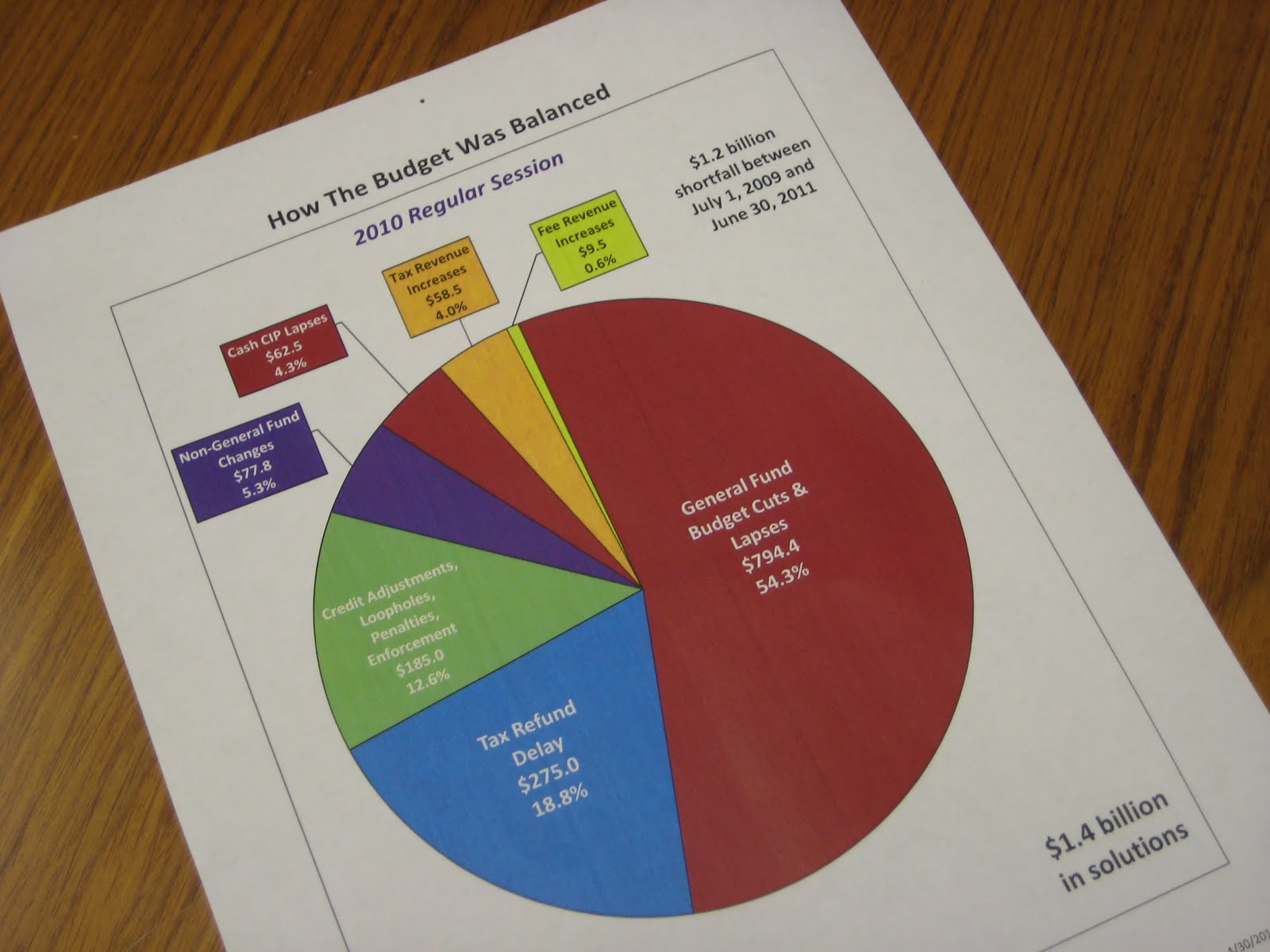
WHAT: The public is invited to an informational briefing on the 2010 legislative session. Rep. Karen Awana and Rep. Maile Shimabukuro will be joined by House Finance Chair, Rep. Marcus Oshiro, who will make a presentation to the community on how the legislature resolved a $1.2 billion shortfall to balance the state budget bill. Information will also be provided on major capital improvement projects for the Waianae Coast.

WHEN: Thursday, July 29, 2010
6:30 -8:30 p.m.


WHERE: SEA COUNTRY COMMUNITY CLUBHOUSE

Directions:
-- Turn mauka (toward the mountains) onto Kaukama Road from Farrington Highway;
-- Go all the way to the end of Kaukama Road, and turn right;
-- Pool and clubhouse will be visible shortly thereafter on the left

Tuesday, July 27, 2010

Camp Aloha

Rep. Tom Brower speaks to the homeless before weekly church dinners at Kakaako Waterfront Park

Rep. Tom Brower (District 23 - Waikiki, Ala Moana) was invited to appear on The Rick Hamada Show, KHVH radio, this morning to talk about the homeless issue. Brower and his colleagues, Rep. John Mizuno and Rep. Rida Cabanilla, recently toured Kapiolani Park and Queen's Surf to talk to the homeless to determine what it will take to move them to other locations, if not shelters.

KITV story on Kapiolani tour here.

Honolulu Star-Advertiser editorial supporting tent cities concept here.

Brower says:

"While 'tent cities' are not a new idea, my office manager and I explored the feasibility of “homeless safe zones” for Hawaii this past January after speaking with advocates and providers last year. We went to talk with the homeless directly because no one has reasonable solutions for the chronic homeless, who won’t go to the shelters. We can either designate areas where the homeless can be or have them everywhere (by default) as they are currently. I believe some areas, due to economics, aesthetics or cultural importance etc., are too important to be overrun with homelessness.

Meanwhile, the State administration has not shown interest. I can understand their concerns regarding liability, safety and the fear of permanent tent cities, but I believe that to do nothing is worse than a good faith attempt to try out a promising solution and make adjustments along the way.

While former Mayor Hannemann recently publicly stated he is open to safe zones, the City’s community services department and State Comptroller seem hesitant to follow through. I have spoken with both the City and State Administration. I was approached by a group of church volunteers and a shelter manager, all of whom have experience with sheltering and feeding the homeless, who would like to see the safe zones implemented. They would be willing to provide the manpower and contribute their knowledge to our efforts."

In the 2010 legislative session, the House passed House Resolution 62 supporting the tent city proposal as part of the solution for homelessness.

Be cool

Richard Borreca's column On Politics in the Star-Advertiser today focused on Speaker of the House Calvin Say. Here it is...


From civil unions to taxes, Calvin Say keeps his cool


With an unassuming, quiet manner, Calvin Say, packing 34 years of legislative experience, shows little until the outcome is obvious.

Using the premise that flashing an agenda too early just makes you a target, Say is most comfortable in the caucus room without the spotlights.

After 11 years as speaker of the House, Say rarely brags, so his new self-assessment is worth noting.

"If people are mad at you, you must be doing something right, you touched a nerve," Say said in an interview last week.

Mad at you, indeed. This year is likely to be Say's most controversial.

It started with both those advocating and fighting a civil union bill fuming at Say because he refused to allow a recorded vote on a motion to kill the bill.

The action was forgotten by the end of the session when the bill's supporters were able to get the votes to bring the bill back for consideration and passage.

The "Impeach Calvin Say" Facebook page had already been started.

Meanwhile, more politically potent foes were gathering.

Say has consistently opposed raising the general excise tax, saying it hurts not just consumers, but business as well.

The public worker unions look at a GET increase as a big help. The increased money is needed to stop layoffs, stop furloughs and help pay increased benefits for workers, the unions argue.

Speaking for himself, J.N. Musto, University of Hawaii Professional Assembly executive director, sums up labor's disenchantment with Say.

"He is particularly harsh on public employees, and he truly believes they are overpaid and over compensated," says Musto.

In the last four years, Say has repeatedly tried to lower public employee benefits as a way to cut the state budget. Unions turned out in force to fight and kill the Say bills.

"He truly believes such bills should pass. After all of that, he then expects the unions to pay tribute. I think it's time to stop doing that," Musto concludes.

Say claims he doesn't know "why labor should be upset."

As a reliable helmsman, Say helped steer the union's own pay settlements through the Legislature, but this year when they wanted assistance with raising taxes, Say refused.

This year, Say appears to have a strong Democratic opponent, Dwight Synan, who, if he doesn't get an outright labor endorsement, will benefit from labor not endorsing Say.

In the larger view, Say's re-election is not just about Say, but about changing the direction of the House away from the anti-GET increase stance it has held in past years.

PROGRESSIVE, pro-labor members of the Senate have clamored for a GET increase.

Opponents have been able to kill it only because they could argue that "it would never pass the House."

Say frames the campaign and the organization of the House as "If not Calvin, then who?"

This fall, voters in Say's working class Palolo-St. Louis district will find themselves answering with results that could set state tax policy far into the future.


Hey cats, here's someone else who keeps his cool...


Monday, July 26, 2010

Pray for Sun

Map: The Honolulu Advertiser
Rep. Karl Rhoads (District 28 - Palama, Chinatown, Downtown, Lower Makiki, Sheridan) recently completed a survey of Mayor Wright Home residents on the availabiity of hot water in their public housing units. He was surprised on two fronts. One is that even after being the district representative since 2006, he had never heard complaints about the lack of hot water until recently. Two is that the lack of hot water is so wide spread and has existed for so long that people have given up complaining to the building manager.
The Honolulu Star-Advertiser published a story last week.
The survey reveals the extent of the problem and the common thread - when it's sunny there is more hot water, and when it rains or is cloudy, there is less to none. That's because the project depends solely on an older solar panel system. The back-up system, which should kick in when there isn't enough sun to generate hot water, broke down years ago and was never fixed.
I got a copy of the survey - these are my calculations. There were 117 units approached.
9.4% or 11/117 said they never have hot water, warm water at best.
22.2% or 26/117 were not home or didn't answer.
21.3% or 25/117 said they had hot water.
47% or 55/117 said they had some hot water, but not all the time.
Rep. Rhoads says he willing to fight for more money at the legislature for repairing the hot water system at Mayor Wright. However, he needs cost estimates from the housing authority and is frustrated that there appears to be no plan to address the problem which has persisted for years.

Tuesday, July 20, 2010

CSG West - Western Academy

CSG-West Western Academy - Colorado Springs - Group photo taken by Rep. Marcus Oshiro

The Council on State Governments - West holds educational seminars for state legislators in a program called the Western Academy. This year, the Academy was held in Colorado Springs, Colorado. House Representatives Faye Hanohano (District 4 - Puna, Pahoa, Hawaiian Acres, and Kalapana) and Marcus Oshiro (District 39 - Wahiawa, Whitmore Village, Launani Valley) were there to represent Hawaii.
Arch Lustberg and Rep. Marcus Oshiro.

Rep. Marcus Oshiro is the incoming Chairman of CSG-West. Arch Lustberg has been training state officials for 25 years and was recently honored by the CSG -West with the Distinguished Service to the States Award.
"I had the honor to be the Master of Ceremony for the four days, cheerleader and "older brother" since most of these 39 Senators and Representatives/Assemblymen, from 12 of 13 Western States have less than 4 years of service," said Rep. Oshiro.


Rep. Faye Hanohano


Adam Schrager and Rep. Marcus Oshiro

The other trainer was Adam Schrager, a news reporter and author. Schrager wrote "A Principled Politician - The Story of Ralph Carr" about Colorado Governor Ralph Carr (R) who protected AJAs during the WWII, and a new book, "The Blueprint", on the political transformation of Colorado during 2004 -2008 from red to blue.

CSG-West is a non-partisan organization which provides a platform for the legislatures in the 13 Western states to collaborate and share information. It was founded in 1947.

Monday, July 19, 2010

Human trafficking legislation called "latest big trend"

According to the Polaris Project, an anti-trafficking group, in 2006 there were eight human trafficking bills passed and enacted across the country. In 2010, there were 350 bills introduced and 40 enacted so far. The Washington Post today reports on how state legislatures are stepping up efforts to address the issue.

In Hawaii, the legislature passed SB2045, a bill that established Class A and B felony human trafficking offenses. Governor Lingle vetoed the bill. The governor's primary objections were that the new offenses were not clearly defined, and that the language was "poorly drafted" and "overly broad" making it "virtually impossible to bring to trial and convict those who engage in human trafficking." Read the full veto message here.

The National Conference of State Legislatures calls human trafficking the "latest big trend." NCSL is expected to issue a policy statement on human trafficking at its annual conference starting next week.

Statistics on human trafficking are considered unreliable and under-estimated. That said, the government estimates that 14,500 - 17,500 victims are brought to the U.S. each year, and that over 250,000 children are at risk of sexual exploitation, thereby falling into the trafficking category.

In Hawaii's high profile trafficking case, sentencing is expected today for the owners of Aloun Farms, who pleaded guilty to conspiracy charges after helping to bring in workers from Thailand.

Tuesday, July 13, 2010

Visiting homeless in Waikiki

Rep. John Mizuno, Rep. Rida Cabanilla and Rep. Tom Brower meet up with media prior to the site visit.

Rep. Mizuno, Rep. Cabanilla and Rep. Brower talk with homeless residents across from Kapiolani Park. An informational briefing will be held on Thursday to discuss the homeless population in Waikiki.

Monday, July 12, 2010

Explore the House Journal


I suspect that not many people, outside of legislators and staff, political junkies and policy wonks actually sit down to read the House Journal. For one thing, the hard copy volumes are not readily available except in libraries and legislative agencies and offices. For another, even if you know precisely what bill, and what day it was up on the Order of the Day for voting, the search for remarks is daunting.

Technology to the rescue.

Now that the House Journal is online in a searchable PDF format, it's so much easier to access. Go to the Capitol Website, click on Bill Status & Documents, scroll down to 2010 Regular Session Order of the Day, Referral Sheets, Action Sheets Journal, select Show House Daily Journal, type in a date and you're there.

For example, here's the link to the House Journal on 4/27/2010, the 58th day of the session, which was the long day of voting on most of the final reading bills.

Access aside, the House Journal is a record of what was said on the floor of the House Chamber. Members may also request that their written remarks on a particular bill be published in the Journal after the vote. Therefore, if you want to know who spoke up, on what bill, and read exactly what they said, word for word, it will be in the Journal. Not all of it is dry. There are jokes and barbs, and if you're lucky, you'll find a malapropian gem. Some members are verbose, others laconic.

For me, the true beauty of browsing through the Journal is knowing that the words that were said on the floor during the 2010 session are now documented for all time, for future generations to read and learn from. It is an important research and historical document. The House Journal is a tremendous resource, and the people in the House Chief Clerk's Office who work on it deserve our thanks.

Friday, July 9, 2010

Balancing the budget

Letter to the Editor in today's Star-Advertiser:

Legislators avoided tax increases

Richard Borreca's column makes some important and cogent points ("Lingle fails to give credit where tax-hike credit is due," Star-Advertiser, July 6). Supplementary points, however, are necessary to correct any misperceptions caused by the headline.

First, the Legislature did not solve the general fund budget shortfall solely by raising taxes. During the 2009 and 2010 sessions, the state faced deficits of $2.1 billion and $1.2 billion, respectively. In both sessions, about 50 percent of the shortfall was addressed by budget cuts initiated by either the governor or Legislature.

Second, the Legislature balanced the budget without a general excise tax increase, without an income tax increase on low- and middle-income families, and without scooping the counties' hotel tax share. The Legislature wanted to avoid a substantial, broad-based tax increase that would have hurt the economic recovery and worsened the cost of living. Instead, the Legislature chose the strategy of increasing selected, narrowly focused taxes and fees and revising certain tax breaks.

For information on how the budget was balanced, see the charts at hawaiihouseblog.blogspot.com.

Rep. Calvin Say, Speaker of the House
Rep. Marcus Oshiro, House Finance Chairman
Rep. Blake Oshiro, House Majority Leader

Pie chart

Click here to see "How the budget was balanced pie chart" and accompanying tables.

Thursday, July 8, 2010

New laws on campaign spending and elections

The Campaign Spending Commission provided the following from their latest newsletter on 2010 legislation, now law, related to the elections process and campaign financing:

HB 2003/Act 211 - recodifies the campaign finance laws and is effective upon approval.

The recodification was the Commission’s top priority because the laws were first enacted in 1973 and “numerous amendments (were) made to the campaign finance laws in a piecemeal fashion and, apparently, with little regard to the laws as a whole. The resulting laws are unorganized, difficult to read, and inconsistent in some areas.”

Act 211 organizes the laws into a new part of chapter 11, with ten subparts. Long and involved sections are divided into shorter sections with clear titles for quick reference. All the laws on one subject are grouped together, in contrast to the prior statutes that required a reader to search through the entire subpart for laws that may apply to that one subject.

Act 211 has other provisions including the following that: clarify the treatment of ballot issue committees by adding a new definition and amending an existing statute relating to enforcement; clarify several statutes by removing references to “penalties” and replacing them with the term “fines” and clarify that the Commission has discretion regarding fines; changes the limit for nonresident contributions from 20 percent per reporting period to 30 percent in the election period; permit a candidate to donate to a public school or public library up to twice the candidate’s contribution limit; and provide transparency for corporate contributions by requiring that reports be filed starting with the reporting period beginning on January 1, 2011.

HB2397/Act 126 moves the primary election date to the second Saturday in August from the second Saturday in September and the filing deadline at the Elections Office to the first Tuesday in June. This act is effective on January 1, 2011.

HB1985/Act 59 removes the state income tax deduction for certain campaign contributions, effective January 1, 2011.

Awana elect Treasurer of Nat'l Caucus of Native American State Legislators

Representative Karen Awana was recently elected Treasurer of the National Caucus of Native American State Legislators by her peers.

“I humbly accept this honor to work alongside our Native American counterparts in a leadership role as we move forward to address issues that we both experience as indigenous peoples of the United States,” said Rep. Awana, who represents District 44 - Honokai Hale, Nanakuli, Lualualei, Maili.

Rep. Awana has also been named the Chair of the Economic Development Committee for the caucus.

The National Caucus of Native American State Legislators was initially formed in 1992 and currently is comprised of approximately 80 members from 18 states. Membership is open to all Native American, Alaska Native and Native Hawaiian state legislators.

Wednesday, July 7, 2010

Gov. Linda made Keith Olbermann's Worst Person

In today's "Worst Person in the World" list on Keith Olbermann's Countdown on MSNBC, Governor Linda Linda made runner-up, with the label "worser", for her comments on vetoing the civil unions bill. "If you are opposed, have the courage to say you are opposed," said Olbermann. "Don't hide behind measly sophistry."  Do you notice the mistake in the clip?


Lawmakers applaud governor for allowing Housing First legislation to become law

Representatives Rida Cabanilla, Chair of the House Housing Committee, and John Mizuno, Chair of the House Human Services Committee, today applauded Governor Linda Lingle for allowing HB2318 to become law.

The bill had been placed on the Governor's potential veto list on June 21, 2010. On Tuesday, July 6, 2010, Governor Lingle officially vetoed 32 of 39 bills on the potential veto list. HB2318 was not vetoed and became law as Act 212 without the Governor’s signature.

"I wrote this bill to effectively address our chronically homeless -- those who suffer from mental illness and addiction and either cannot cope or are not accepted into our emergency or transitional shelters,” said Rep. Cabanilla. “The Housing First concept has been very effective as a cleanup tool in eight major cities. The target population is homeless who linger in streets, parks and major tourist hubs. It will help protect our pristine environment and tourist industry while providing stable housing for the chronically homeless. This is a business as well as a humane model in addressing Hawaii’s homeless problem."

HB2318, CD1 establishes the Housing First Program, which creates a permanent residence for the chronically homeless, providing them with a stable housing environment that promotes wellness and therapeutic success. The bill will also allow the Hawaii Public Housing Authority the flexibility to implement the program as it deems appropriate for homeless clientele.

The bill mandates a full report to the Legislature no later than 20 days prior to the convening of the 2011 regular session. The report will list the total number of participants in the housing first programs, the annual costs of the programs, the types of services offered, and information regarding the duration of services required for each participant. The Legislature can then determine if the program should expand based on the success rate of its participants.

"This is an effective step toward reducing homelessness in Hawaii,” said Rep. Mizuno. “The program deals with our chronically homeless population, many who suffer from a mental illness and/or a drug addiction. Stability rather than shuffling them from park to park is a more cost effective and humane way to deal with homelessness in Hawaii.”

New law expands licensing violations to all contractors who hire illegal workers

Governor Lingle Wednesday signed into law HB2897 which expands licensing violations to all contractors who hire illegal workers. The measure, now Act 185, subjects a contractor to the revocation, suspension, or nonrenewal of its license for knowingly or intentionally employing a person on any project or operation who is not eligible to work in the United States under federal law.

A previous law, Act 145, Session Laws of Hawaii of 2009, subjected only contractors working on public work construction projects affiliated with a government agency to licensing penalties for hiring employees ineligible to work in the United States.

“The new law provides a fair and level playing field for contractors hiring legally-employable workers,” said Vice Speaker Michael Magaoay, a co-introducer of the bill. “When dishonest contractors exploit illegal labor for their personal gain, they are hurting our local construction workers.” Magaoay represents House District 46 - Kaena Point, Schofield, Mokuleia, Waialua, Haleiwa, Waimea, Pupukea, Sunset, Kahuku, Kunia Camp, Poamoho, Wheeler, and Laie.

“I’m pleased the governor decided to sign this important bill,” said Rep. Henry Aquino, a member of the House Labor and Public Employment Committee and co-introducer of the bill. “It makes unscrupulous contractors accountable for their actions and ensures our local workers have job opportunities, especially during a weak economy.” Aquino represents House District 35 - Pearl City, and Waipahu.

2010 Vetoes and Overrides

For a list of all 2010 vetoes by the governor, click here.

For a list of all 2010 veto overrides by the legislature, click here.

The math: 47 vetoes and 11 overrides.

Tuesday, July 6, 2010

Cooking Takai

I love finding gems like this beauty discovered amid the clutter social networking sites serve on their news feeds. 

In an examiner.com article, Representative Mark Takai shared two family recipes, the first recipe is his mother's tomato-less brown stew and the second is his wife's lemon bars.

Friday, July 2, 2010

Speaker Say's Memo to House Members on No Special Session to Override Vetoed Bills

Today House Speaker Calvin Say sent a memo to all House members about the decision not to call the House of Representatives into special session to override Governor Linda Lingle's vetoes.

In the memo, Speaker Say notes that "the legislature had good justification for passing them (bills)," but through discussion with the House majority members he concluded that "no absolute imperative or exigent reason exists to override any of the vetoes of the bills on the list.."

The memo explains in detail the four reasons why the bills did not warrant an override and gives special mention to the two education bills (HB2377 and HB2376) for an appointed Board of Education.

You can read, share and link to the memo here.

House Not Calling for Special Session to Override Vetoes

Speaker Calvin Say today announced that he would not call the House of Representatives into special session on July 6, 2010 to override Governor Linda Lingle's vetoes. The state constitution authorizes the Legislature to convene a special session by noon 45 days following the end of regular session – the final day that the Governor has to veto any previously passed bills.
Speaker Say, in concurrence with members of House Leadership, cited four considerations for deciding why the bills on the governor’s veto list did not warrant an override, including:

• The bill does not appear to have the requisite two-thirds vote in both chambers necessary to override a veto;

• The bill does not rise to a sufficient level of statewide concern to warrant the extraordinary action of a legislative override;

• The Governor's preliminary objections to the bill have sufficient merit deserving of further evaluation;

• Although the bill was intended to enhance state revenue to balance the budget when passed during the session, it is now no longer necessary because of the Council on Revenue's improved revenue projection.

"It's my personal belief that simply because we have the legislative super-majority to override is not justification for us to do so. Partisan politics should not be a consideration or basis for any policy decision. The House should be proud of the work accomplished during the regular session – including balancing the state's budget without increasing the general excise tax, without increasing income taxes on low- and moderate-income families, and without scooping the counties’ hotel tax share," said Speaker Calvin Say.

On June 21, 2010 the Governor released to the Legislature her list of 39 bills that were intended for veto. The list included bills on public safety, civil union, homelessness, education and more.

Thursday, July 1, 2010

List of all laws effective today July 1, 2010

About 70 laws became effective as of 12:01 a.m. this morning. Star Advertiser has an article about the shark fin ban, cigarette tax increase, and others. The Maui News has an extensive article about the 1% increase of the transient accommodations tax. But if you want the details on all 70 laws, click on this link to a PDF document, compiled by the Legislative Reference Bureau library, of all the laws including act numbers, bill numbers, description, and status.

Sharks in Texas Waters

In June I took some time off of work. I packed my bags, cleared my datebook, and flew out into the starry  night to spend a few weeks with friends in France and and family in Texas. On my return from France, I stopped in Fort Hood to visit my two younger sisters who are stationed there while in the U.S. Army. Of course, I had to rent a car because walking or biking in that miserable Texas heat was not on my “Vacay 2010: Things I Must Do” list.

The strangest thing happened when I got into the vehicle of the Enterprise employee, Sierra, who picked me up at my sister’s house. Sierra’s phone rang and she started talking to someone who seemed to be in a different time zone then us, because although it was 1 p.m. in Killeen, she had asked him if he was headed to school to teach this morning. The first thing that came to mind, “That would be funny if she was talking to someone from Hawaii.”

Ha! He was calling from Hawaii. Sierra had just returned from a two-week vacation on Oahu. The guy on the phone was a hot (her word) surf instructor with the most adorable dreadlocks (her description) whom she had met on Waikiki beach. Cue in choir singing “It’s a small world after all…it’s a small, small world.”

But that’s not why I'm blogging about this random coincidental turn of events that started with a Google search and ended with a new friend in Killeen, Texas.

Here it goes. This is why.

Sierra rambled on about how much she loved Hawaii and all the beautiful things she got to see and the interesting people she got to meet and the delicious food she got to eat. “But,” she said, “I didn’t get to taste the one thing I most wanted.”

“What?” I asked, thinking she’d say something like poi or taro.

“Shark fin soup.”

Oh, snap.

Epilogue: I told Sierra that I worked at the Legislature and explained to her that shark fins may soon be banned in Hawaii because of a new bill we recently approved  that would take effect July 1, 2010. She was disappointed. I, on the other hand, as a supporter of the law, took a teeny-tiny bit of pleasure in telling her about the ban and the reason it's important.

ACT 148 (SB2169) RELATING TO SHARK FINS
Report Title: Possession, Sale, and Distribution of Shark Fins
Description: Prohibits the possession, sale, and distribution of shark fins in the State; repeals the ban on the practice of shark finning. (CD1)

A ban on shark fins is one of about 70 laws that take effect today. See the list here
Star Advertiser has an article in today's paper.

Wednesday, June 30, 2010

Rep. Takumi says U.S. needs common set of academic standards

Representative Roy Takumi, chair of the House Education Committee, expounds on the need for a common set of academic standards in the U.S. educational system. The article was printed in the Honolulu Star Advertiser.
Common set of academic standards needed

If you were to develop an educational system from scratch, more than likely one of the key components would be a common set of academic standards so that every student and teacher would know what is expected to be learned and taught. Unfortunately, in the U.S. this is not the case. We have a hodgepodge of varying standards among states that differ widely in focus, rigor and coherence. For example, the journal Education Next used 2009 National Assessment of Educational Progress data to empirically evaluate each state's proficiency standards. Only five states, including Hawaii, received an "A" rating for their standards.

Given that we are a highly mobile society and that globalization is an increasing trend, it's critical that as a nation we adopt a common set of high academic standards that are shared across states to ensure that all of America's students have the tools they need to succeed.

Talk about having common standards is nothing new.

In 1959, President Dwight D. Eisenhower called for "national standards" in education. More than 50 years later, we are finally on the verge of taking action. Spearheaded by a number of organizations, including the Council of Chief State School Officers and the National Governors Association, the Common Core State Standard Initiative (CCSSI) establishes a single, clear set of K-12 mathematics and English language arts standards. Forty-eight states, including Hawaii, have signed on to share and voluntarily adopt the standards.

Why is this effort so important? Simply put, the U.S. is losing its competitive and educational edge.

Fifteen years ago, the U.S. led the world in college graduation rates; by 2006, it had dropped to 14th. While we have stagnated and fallen behind, countries such as Singapore, China, Finland and Brazil have aggressively moved to create knowledge-fueled innovation economies by investing in quality education.

Over the past 25 years, South Korea went from less than a quarter of its citizens finishing high school to more than 95 percent today. In 2003, Germany launched an ambitious education initiative including starting 10,000 all-day schools and investing an additional $4.6 billion in education. This is the equivalent of the U.S. investing more than $15 billion compared to the $4.35 billion available for the much-ballyhooed Race to the Top competitive grants.

But it's not even the name-brand countries that are surpassing the U.S. On international benchmark tests such as the Programme for International Student Assessment, countries such as the Slovak Republic, Hungary and Iceland outperform our students.

Recently, our state Board of Education officially adopted CCSSI, and as more states do so, we will have consistent high-quality academic benchmarks for all students, regardless of where they live. It's about time. After all, it shouldn't matter if a student enters first grade in one state and graduates in another.

That said, it's important to keep in mind H.L. Mencken's observation, "For every complex problem there is one solution which is simple, neat and wrong." It would be a mistake to conclude that common core standards will magically improve student achievement. It is just one component of a broader system that must also include assessments that measure performance, curriculum materials that are coherent and aligned, and professional development for teachers and principals. Fortunately, this can be done in a far more efficient and effective manner when states work together.

By doing so, our students, no matter where they live, stand a far better chance to achieve their hopes and dreams. Isn't this what schools should be all about?

State Rep. Roy Takumi (D-Pearl City) chairs the House Education Committee.

Tuesday, June 29, 2010

Sending homeless back to their home state

Representatives Rida Cabanilla and John Mizuno yesterday held a press conference with local reporters at the Hawaii State Capitol to talk about the benefits of a return-to-home program in Hawaii. A similar program in New York City issues plane, bus and train tickets to homeless people from other states and countries who want to return home where they will have a place to live.

Rep. Mizuno introduced Gregory Reese, a 39-year-old man who became homeless after two job offers fell through upon arriving to Hawaii. He wants to return to Seattle where his father lives, but has no money to purchase a ticket. He's been on Oahu for about a month. Rep. Mizuno donated $100 of his own money towards the purchase of a one-way ticket for Reese.

In these excerpts from the press conference, Rep. Cabanilla talks about the return-to-home program she proposed in previous sessions and how it could save the state lots of money, and Rep. Mizuno explains Reese's situation and how he and others like him could benefit from a return-to-home program similar to that of New York City.


Hawaii International Micro Robot Conference, Tournament on the Big Island

The 1st Hawaii International Micro Robot Conference and Tournament will be held at the ‘Imiloa Astronomy Center at the University of Hawaii at Hilo from July 16-19, 2010.

The effort is being led by the Waiakea High School Robotics Club and the Hawaii Space Grant Consortium, two groups that have provided many opportunities for science students and teachers in the field of robotics and technology.

Art Kimura, Education Specialist at the Hawaii Space Grant Consortium, said this event is being held to jumpstart the conversation on how the Big Island can benefit from micro mechanisms. The event will allow community leaders to talk to industry experts and learn about the advantages and possibilities of a micro mechanisms and robotics industry rooting from the islands.

"The exciting thing about this endeavor is the idea that the Big Island could become a center for the development of micro mechanisms research and development and a micro-robotics industry in the pacific," Kimura said.

Because of this tournament, Hawaii students will now have the opportunity to compete without paying high costs to fly elsewhere for the same experience.

The goal of the conference is to stimulate high technology education and assist in the creation of a technically capable workforce by developing the infrastructure and skill sets necessary to support high technology robotics based activities.

"Once this is in place,” said Rep. Nakashima, a supporter of the effort, “the next step will be identifying the real world potential and application for this growing technology as we invite new industries to the Big Island to take advantage of our newly skilled work force.”

A public event featuring an origami presentation and bipedal robot demonstration will be held on Saturday, July 17, 2010, 6:30-8:00 p.m. at ‘Imiloa Astronomy Center.

• Origami presentation by Hidenori Ishihara, a robotics professor from Kagawa University.

• Bipedal robot demonstration by Risa Saito, a Japanese high school student who won the bipedal competition in the 2009 Micro Robot Contest at Nagoya University, and Hideaki Matsutani, a Japanese technical education teacher who conducts bipedal workshops in Nagoya for middle school students.

Seating for this event is first come, first served.

Monday, June 28, 2010

Aloha ‘Aina Earth Day #82 Recycling Community Clean-Up Project

What: Aloha ‘Aina Earth Day #82 Recycling Community Clean-Up Project to benefit the Kualoa-He’eia Ecumenical Youth (KEY) Project.

The public is encouraged to bring the following items: scrap metal, refrigerators, freezer, air conditioners, newspaper, cardboard, cans, incandescent light bulbs (exchange: 2 CFLs per person), green waste, batteries (all types), cooking, telephone books/ magazines, eyeglasses/ hearing aids, used clothing and household items, cellular phones, printer cartridges, computers/ e-waste (unlimited), canned good.

Please do not bring tires, paints, hazardous fluids, microwave ovens, televisions, gas tanks, or motor oil.

Where: Kahaluu Regional Park

47-200 Waihe'e Road

When: Saturday, July 24, 2010

8 a.m. to 2 p.m.

Why: The monthly recycling drive was created to provide residents with an easy way to get rid of recyclable waste while raising money for community groups.

Call Rep. Jessica Wooley at 808-586-8540 for more information.

Friday, June 25, 2010

Coming up on Kukui Connection


Rep. Hermina Morita will be a guest on Rep. Marilyn Lee's public affairs show "Kukui Connection" on Sunday June 27, 4:00 p.m., Oceanic Cable - Olelo, channel 54. The show repeats on July 11, July 25, and August 1.

Debbie Shimizu and Katie Reardon of the Hawaii Democratic Women's Caucus will be Rep. Lee's guests on July 4, repeating on July 18, and August 8.

New Law establishes process for deployed military on child custody

Rep. Cindy Evans

Governor Lingle today signed into law HB2061 which establishes a process by which family court can resolve matters related to custody and visitation for active duty service members of the U.S. Armed Forces, Armed Forces Reserves, and National Guard when deployed.

At issue is the military-readiness of parents who are faced with child custody and visitation matters when deployed, and also the well-being of the affected children. The measure provides for the court a legal process to address custody and visitation matters.

“This new law reflects the changing needs of our military families, and I’m pleased we are now able to have a positive impact on the children of active members of the armed forces,” said Rep. Cindy Evans, who introduced the bill.

Some of the provisions include:
· Allowing an already deployed parent to participate in a custody hearing through electronic means such as telephone, video conference, or other means that the court deems reliable.
· Clarifying that deployment shall not be the sole factor in determining custody and that awarding custody shall be in relation to all factors.
· Requirements related to visitation and contact.
· Delegation of the deployed parent’s contact rights.

The new law goes into effect on August 1, 2010.

New Law Strengthens Sanitation Inspection Program

Governor Lingle today signed into law HB2688 which strengthens the state’s sanitation inspection program, including the hiring of more inspectors. The measure, now Act 176, changes the name of the “Environmental Health Education Fund” to the “Sanitation and Environmental Health Special Fund”, and allows the money in the fund to be used for sanitation programs and activities, including monitoring Hawaii’s restaurants and food establishments.

“Proper sanitation in public areas is critical to the health and safety of our population,” said Rep. Ryan Yamane, Chair of the House Committee on Health. “I’m pleased that the Governor signed this bill into law since it will allow the Department of Health to hire needed sanitation and vector control inspectors and to provide greater support to Hawaii businesses which have an impact on public health.”

The sanitation branch is charged with implementing programs related to:
· Food protection
· The regulation of barber shops, beauty parlors, massage parlors, tattoo shops,
mortuaries, public swimming pools, and public laundries;
· The inspection of tenement houses, lodging houses, and boarding houses;
· The licensing of tattoo artists and embalmers; and
· Enforcing the sanitation requirements for hospitals and medical facilities.

“Even before the infamous video of the rats in certain food vendor areas, I’ve been concerned that the number of sanitation inspectors is woefully low for the number of food establishments in Hawaii,” said Rep. Marcus Oshiro, the introducer of the bill. “It’s irresponsible to create that kind of health risk for the general public. This new law sets up a special fund that allows the sanitation branch, which brings in much of the fees through their activities, to use the money for sanitation purposes and not just for environmental health. It’s a good bill that will greatly benefit the public.”

The video from Disappeared News:

Thursday, June 24, 2010

Political Malapropisms


I had a good laugh today when I read The Thicket's post on various malapropisms from politicians across time and space. Entitled "A Box of Pandoras and Other Political Malapropisms", the title was inspired by a story about former New Mexico Governor Bruce King, a cigar smoker no doubt, who once said of a certain legislative proposal: "That will open up a whole box of Pandoras."

I'm sure that Hawaii politicians have come up with some pretty funny ones themselves. I once had to tell a former lawmaker, prior to an interview, "Actually Rep, it's 'omnibus bill' not 'ominous bill'.

Here are some good examples from Texas taken from the The Thicket's post. And if you have some local stories to share, please do.

"It's the sediment of the House that we adjourn."--Texas House Speaker Wayne Clayton

"Let's do this in one foul sweep."--Texas House Speaker Wayne Clayton

"This is unparalyzed in the state's history."--Texas House Speaker Gib Lewis

"I am filled with humidity."--Texas House Speaker Gib Lewis

"I want to thank each and every one of you for having extinguished yourselves this session."--Texas House Speaker Gib Lewis.

"We'll run it up the flagpole and see who salutes that booger."--Texas House Speaker Gib Lewis

"There's a lot of uncertainty that's not clear in my mind."--Texas House Speaker Gib Lewis
UPDATE:
And here's a few more from one of the members of the Hawaii press corps at the State Capitol...
"You can't have your cake and eat it all."
"We should iron our situation here."
"This is way down on the food channel."
"We can't rest our laurels on this."
"We came up smiling like a rose."
UPDATE 2:
Gems from Rep. Roy Takumi, but he's not spilling the beans on who said what on the House floor:
"This is so important it should be compulsatory."

"All doctors have to take the hypocrisy oath."

Wednesday, June 23, 2010

New Law provides tax refunds in timely manner

Rep. Pono Chong, Majority Whip

Governor Lingle today signed into law HB1948, a bill that requires the Department of Taxation to provide refunds to taxpayers in a timely manner. The legislation, now Act 171, states that the department must provide refunds within 90 days from the date the tax return is filed, or the due date of the tax return, whichever is later.

“One of the main benefits is that the state must pay interest to the taxpayer if the return is not paid within the required time frame,” said Rep. Pono Chong, the introducer of the bill. “The legislature was concerned that using the refunds as a way to balance the budget was merely delaying our fiscal responsibility. In addition, I think most taxpayers understand that the overpayment to the government is their money and they expect a return in a reasonable period.

The bill also requires that all general revenues collected from an increase of any general excise or use tax be used first to pay tax refunds delayed from fiscal years 2010 and 2011. The law goes into effect on July 1, 2010.

Disaster Preparedness Training Class in Hau’ula

The public is invited to a State Civil Defense Disaster Preparedness Training Class on Windward Oahu. The class will focus on a four-phased disaster preparedness plan for Hau'ula.

Please contact the Office of Representative Jessica Wooley at 808-586-8540.

When: Tuesday, June 29, 2010, 6 p.m. – 8 p.m.


Where: Hau’ula Elementary School Cafeteria

Container Fee Bill Signed Into Law to Help Fight Invasive Species

Rep. Clift Tsuji - Chair, House Agriculture Committee

Governor Lingle today signed into law a bill that will help to fight invasive species by strengthening Hawaii’s agricultural inspection and biosecurity laws. SB2523, now Act 173, does the following:

• Exempts aggregate bulk freight, cement bulk freight, coal bulk freight and liquid bulk freight from the pest inspection, quarantine and eradication service fee. Imposes fines for failure to pay, bill or remit in a timely manner the same fee.

• Expands the purposes for expenditure from the pest inspection, quarantine and eradiation fund.

• Requires the deposit of fees and fines relating to agricultural inspections into the fund.

• Repeals the permit revolving fund and microorganism import certification revolving fund and transfers moneys into the pest inspection, quarantine and eradiation fund.

“SB2523 was one of the most important bills for the agriculture industry in the 2010 legislative session,” said Rep. Clift Tsuji, Chair of the House Committee on Agriculture. “This new law gives the Department of Agriculture greater resources to focus on agriculture inspection and biosecurity. The legislature is greatly concerned about the impact of invasive species on agriculture and our natural environment.”

The other critical piece of legislation for agriculture and invasive species is HB1684, signed into law as Act 128 in May. That bill established fines and penalties for the intentional spreading or introducing of invasive species.

“Invasive species harms not only our environment, but our economy, our health and the lifestyle of Hawaii’s people,” said Rep. Tsuji. “We felt greater fines and penalties are warranted given the serious impact to the state.”

Civil Unions and the Courts

This is an excerpt from the press conference video recorded on Monday, 6/21/10. It pertains to the topic of how the civil unions issue may play out based on judicial rulings on the state or federal level. Featured are Majority Leader, Rep. Blake Oshiro and Speaker of the House, Rep. Calvin Say talking with Hawaii journalists.

Tuesday, June 22, 2010

House Leaders Respond to Potential Veto of HB 444: Civil Unions


Speaker Calvin Say and House Majority Leader Blake Oshiro yesterday met with reporters to talk about the governor's list of potential vetoes. She has until July 6 to make a decision on 39 bills being considered for veto. The list includes legislation regarding civil unions, the board of education, tax caps and more. You can see the entire list and the governor's explanation for potential veto here.

Monday, June 21, 2010

39 Bills on the Potential Veto List

Governor Lingle today announced a potential veto list of 39 bills from the 2010 legislative session. As the Governor explained, the list is exhaustive rather than narrow. It gives her the option to veto the bill by Tuesday, July 6th. The House Majority will caucus tomorrow to discuss the measures.

The Governor used four critieria to place a bill on the list. They are:

1. Poor public policy
2. Unconstitutional
3. Harms the state's economic recovery
4. More time needed for consideration


HB415 HD2 SD2 CD1 RELATING TO PUBLIC SAFETY.
Veto Explanation: Directs the auditor to conduct an expensive and unnecessary audit of the Department of Public Safety’s contracts with mainland prisons and the Honolulu federal detention center.

HB444 HD1 SD1 RELATING TO CIVIL UNIONS.
Veto Explanation: Extends the same rights, benefits, protections, and responsibilities of spouses in a marriage to partners in a civil union.

HB865 HD1 SD1 CD1 RELATING TO TRANSPORTATION.
Veto Explanation: Establishes an unfunded mandate on the State Department of Transportation by setting up a working group to perform a feasibility study on transferring state highway maintenance functions to Maui County without providing resources or allowing adequate time for the study.

HB921 HD1 SD2 RELATING TO PUBLIC LANDS.
Veto Explanation: Complicates the transfer of 999-year homestead leases, bypassing existing statutes that provide for the determination of successorship.

HB1015 HD1 SD2 CD1 RELATING TO OBLIGATIONS OF THE DEPARTMENT OF HAWAIIAN HOME LANDS TRUST FUND.
Veto Explanation: Violates the Hawaii State Constitution by embracing more subjects than its title allows and creates ambiguities in the law by amending various provisions relating to the Department of Hawaiian Home Lands.

HB1212 HD1 SD1 CD1 RELATING TO INFORMATION PRACTICES.
Veto Explanation: Disallows the Department of Commerce and Consumer Affairs from disclosing pending complaints against a business or professional to the detriment of consumers who need the information for informed decision-making.

HB1665 HD1 SD2 CD1 RELATING TO HAWAIIAN FISHPONDS.
Veto Explanation: Prohibits the sale or transfer of government-owned Hawaiian fish ponds, which inadvertently results in the Department of Transportation caring for fish ponds that were intended to be made available to other organizations after being acquired as part of the Kalanianaole Highway widening project.

HB1907 HD1 SD1 CD1 RELATING TO TAXATION.
Veto Explanation: Adversely impacts Hawaii taxpayers and businesses by capping state income tax itemized deductions and making the capital goods excise tax credit nonrefundable for businesses until January 1, 2016, contrary to sound economic policy.

HB2083 HD1 SD2 RELATING TO MILK LABELING.
Veto Explanation: Requires milk beverages to be labeled with the date of pasteurization or the date of packaging without clearly defining what is considered pasteurized milk and which pasteurization date should be used; also takes Hawaii out of compliance with the National Conference of Interstate Milk Shipper's Pasteurized Milk Regulations.

HB2133 HD1 SD1 CD1 RELATING TO PROCUREMENT.
Veto Explanation: Inappropriately requires the State Procurement Office to authorize reseller agreements in multi-state contracting agreements, and narrowly defines "local reseller."

HB2152 HD1 SD1 RELATING TO BUILDING DESIGN FOR PERSONS WITH DISABILITIES. Veto Explanation: Increases the cost of planning and designing housing, public buildings, and other construction by allowing the Disability and Communication Access Board (DCAB) to charge a significant fee for the review of American Disabilities Act compliance, duplicating compliance reviews already done by professional architects and engineers.

HB2239 SD2 CD1 RELATING TO THE DEPOSIT BEVERAGE CONTAINER PROGRAM. Veto Explanation: Increases the cost of dietary supplements and impacts consumers purchasing healthy beverages by repealing the exemption such supplements currently have from the expensive and ineffective Hawaii Deposit Beverage Container Recycling Program.

HB2283 HD2 SD1 CD1 RELATING TO PUBLIC PROCUREMENT.
Veto Explanation: Subjects public employees and private entities to criminal sanctions under vague and non-specific principles of procurement ethics.

HB2289 HD2 SD1 CD1 RELATING TO GIFT CERTIFICATES.
Veto Explanation: Establishes fees on the issuance of gift certificates, reversing previous statutes that prohibited such fees.

HB2318 HD2 SD1 CD1 RELATING TO THE HOMELESS.
Veto Explanation: Requires the Hawaii Public Housing Authority to establish programs and services without clearly defining the eligible population or providing a sustainable, long-term source of funding.

HB2377 HD3 SD2 CD1 RELATING TO EDUCATION.
Veto Explanation: Amends the Board of Education composition and member selection process in a manner that may not ensure the Board will be composed of members who reflect the best interests of the public and who understand the role of setting public education policies.

HB2441 HD2 SD2 CD1 RELATING TO PROCUREMENT.
Veto Explanation: Creates unrealistic deadlines for the Department of Transportation and Department of Hawaiian Home Lands to award public contracts on bid proposals, and encourages inappropriate relationships by specifying that gifts made to the State shall not constitute or require a procurement contract.

HB2497 SD1 CD1 RELATING TO THE ISSUANCE OF SPECIAL PURPOSE REVENUE BONDS.
Veto Explanation: Authorizes the issuance of up to $40,000,000 in Special Purpose Revenue Bonds to Carbon Bio-Engineers despite possible patent ownership and licensing issues associated with this firm.

HB2583 SD2 CD1 RELATING TO IMPOUNDED VESSELS.
Veto Explanation: Violates the Hawaii State Constitution by embracing more subjects than its title allows by adding provisions outside of the scope of impounded vessels.

HB2644 HD2 SD2 CD1 RELATING TO SOLID WASTE.
Veto Explanation: Increases the cost of waste disposal by expanding the current solid waste disposal fee to include solid waste disposed out-of-State.

HB2708 HD1 SD1 RELATING TO TRANSPORTATION.
Veto Explanation: Unnecessarily requires the Department of Transportation to establish administrative rules regarding the public involvement process, even though public involvement policies have already been adopted by the Department.

HB2774 HD2 SD2 CD1 RELATING TO HUMAN SERVICES.
Veto Explanation: Decreases the effectiveness of the Hawaii Premium Plus Program to create jobs by prohibiting the Department of Human Services from expending more than $5 million on the program within a nine-month period starting May 1, 2010.

SB1105 SD2 HD1 CD1 RELATING TO LEGISLATIVE HEARINGS AND PROCEDURES.
Veto Explanation: Burdens state agencies with the task of preparing for hearings and briefings that are duplicative and waste state resources.

SB2001 SD1 HD1 RELATING TO TAXATION.
Veto Explanation: Extends the Tax Credit for Research Activities by one year at the expense of the High Technology Business Investment Tax Credit and Technology Infrastructure Tax Credit, which must be repealed early on May 1, 2010 instead of December 31, 2010, reversing the State's commitments to job creating businesses and their investors.

SB2020 HD2 CD1 RELATING TO REAL PROPERTY.
Veto Explanation: Extends Act 189, Session Laws of Hawaii 2009, which changes the process for renegotiating the amount of rent during the term of an existing commercial or industrial lease, despite litigation that has deemed the Act unconstitutional.

SB2045 SD1 HD1 CD1 RELATING TO CRIME.
Veto Explanation: Proposes the establishment of class A and B sexual human trafficking offenses to prohibit conduct that is already prohibited under Hawaii law, and does not clearly define the prohibited conduct in a way that can be enforced and prosecuted in court.

SB2165 SD1 HD2 CD1 RELATING TO PRIVATE GUARDS.
Veto Explanation: Establishes registration and licensure requirements for security guards and individuals acting in a guard capacity that may not be appropriate for all guards in the industry.

SB2324 SD2 HD2 CD1 RELATING TO UNEMPLOYMENT INSURANCE BENEFITS.
Veto Explanation: Violates the intent of Unemployment Insurance benefits by unfairly allowing certain partially unemployed individuals attached to a regular employer to continue receiving unemployment benefits even if they voluntarily quit their secondary part-time employment.

SB2434 SD1 HD1 CD1 RELATING TO SALARIES.
Veto Explanation: Allows hefty salary increases, including bonuses, for certain education staff including the Superintendent and Complex Area Superintendents, that could provide up to a maximum compensation of $250,000 per year without statutorily specific performance obligations.

SB2473 SD1 HD2 CD1 RELATING TO HOUSING.
Veto Explanation: Allows an unlimited number of grandchildren of elderly housing project residents to reside with seniors under certain situations even though elderly housing projects have limited space and are not designed to accommodate children.

SB2491 SD2 HD1 CD1 RELATING TO TELEMEDICINE.
Veto Explanation: Jeopardizes Federal funding for certain Medicaid services by allowing health plans under Medicaid or QUEST programs to deliver telehealth services in rural counties by mobile medical van without the approval of the Federal Centers for Medicaid and Medicare Services or oversight by the Department of Human Services.

SB2534 SD2 HD1 CD1 RELATING TO BAIL.
Veto Explanation: Adversely impacts state and county law enforcement agencies by requiring them to divert limited resources to accept bail on weekends and holidays when the courts are closed, without the proper training, facilities or staffing.

SB2547 SD1 HD1 RELATING TO SMALL BOAT HARBORS.
Veto Explanation: Favors a specific landowner and certain tour operators by requiring the Department of Land and Natural Resources to regulate commercial boat operators bringing visitors onto "quasi-public" property despite the Department lacking necessary resources to do so.

SB2566 HD2 CD1 RELATING TO MEDICAL AND REHABILITATION BENEFITS.
Veto Explanation: Increases workers' compensation costs and the potential for conflicts of interest by allowing doctors to perform one-time diagnostic consultations at medical facilities in which they have a financial interest, without verification from the insurer or employer that the consultation is necessary.

SB2610 HD1 CD1 RELATING TO CONVEYANCE TAX.
Veto Explanation: Forces the Department of Taxation to reprioritize the scanning of its own tax documents and payment vouchers by requiring the Department to provide free digital images of property conveyance certificates to county real property assessment divisions by a specific time.

SB2849 SD2 HD1 CD1 RELATING TO THE HAWAII EMPLOYER-UNION HEALTH BENEFITS TRUST FUND.
Veto Explanation: Irresponsibly exempts from the state budget allotment process $478,025,239 in general fund appropriations to the Hawaii Employer-Union Health Benefits Trust Fund for fiscal year 2011.

SB2883 SD1 HD2 CD1 RELATING TO EMPLOYMENT PRACTICES.
Veto Explanation: Legislates a collective bargaining matter that may be preempted by the federal Labor Management Relations Act of 1947 by making it unlawful for employers to fire, demote, or withhold pay from an employee using accrued sick leave.

SB2919 SD1 HD1 CD1 RELATING TO THE HAWAII STATE HOSPITAL.
Veto Explanation: Improperly transfers the responsibility for security at the Hawaii State Hospital from the Department of Health to the Department of Public Safety.

SB2951 SD2 HD2 CD1 RELATING TO AGRICULTURE.
Veto Explanation: Discourages the use of public land for valid and necessary public purposes by providing unprecedented compensation to agricultural lessees of public land when such leases are withdrawn by the Department of Land and Natural Resources for public uses.